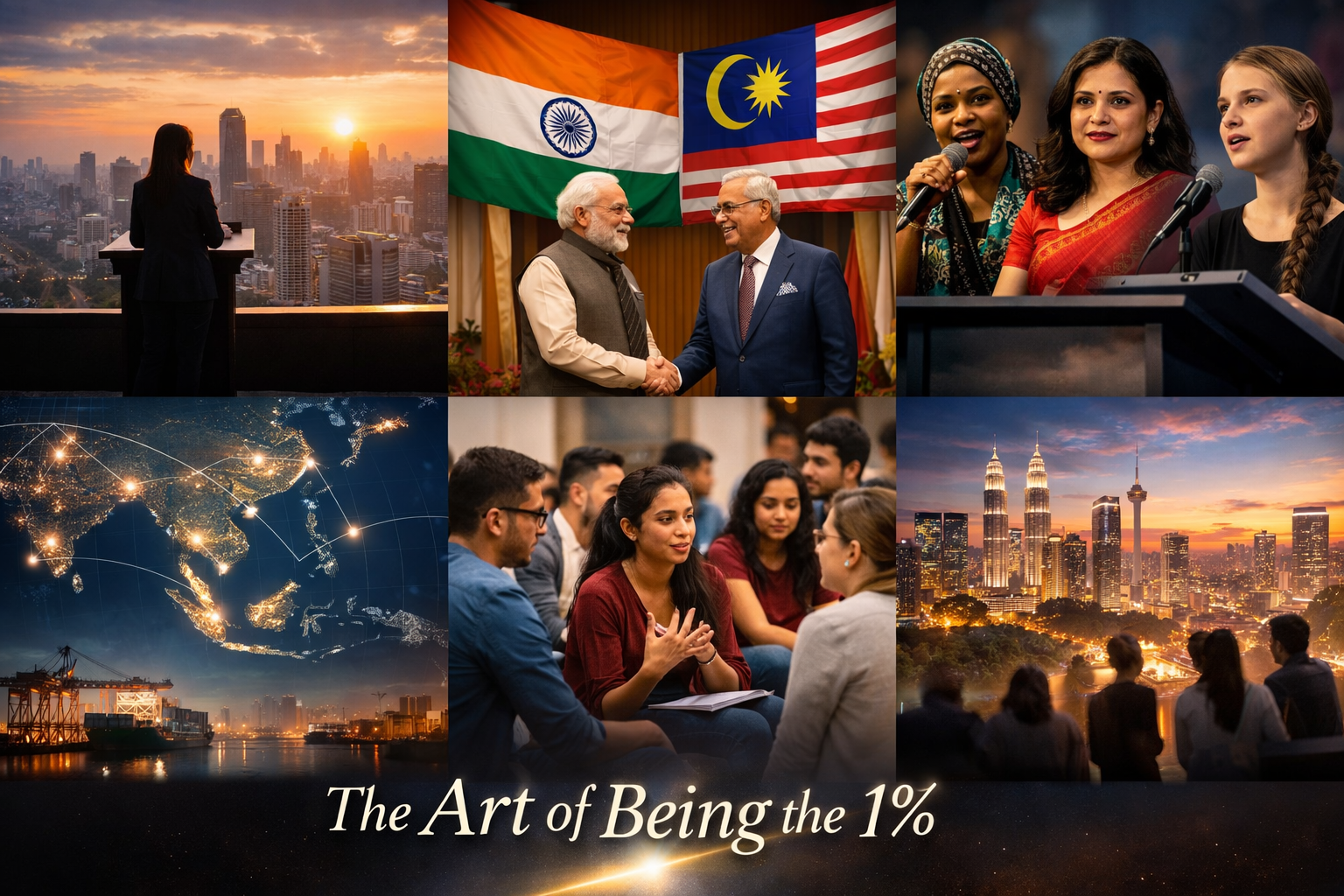

In a world often defined by great powers and big headlines, we sometimes forget a fundamental truth: it’s rarely the 99% that shape history — but the determined 1% willing to think, act and lead differently. Whether through ideas, diplomacy, diplomacy, technology, or culture, the 1% move mountains by changing narratives, realigning priorities, and steering the course of nations.
This is not idealism. It is geopolitics.
The world today is in a geopolitical transition — marked by major power rivalries, emerging regional architectures, and shifting trade patterns. Great power competition in Asia, tensions in the Indo-Pacific, and global fragmentation have created uncertainty, but also profound opportunities for cooperation and inclusive growth.
Yet even in this complex chessboard, small forces — individuals, civil society movements, middle powers, and strategic partnerships — are shaping outcomes.
1. The Individual 1%: Influence Beyond Numbers
History is full of examples where one voice became a global echo. Greta Thunberg’s climate strikes started with a single school strike and grew into a global movement that shifted political discourse worldwide. Zuriel Oduwole, a young activist and filmmaker, turned childhood curiosity into diplomatic engagement across Africa. Their impact underscores a key truth: leadership and influence are not bound by age or number, but by clarity of purpose and persistence.
These individuals remind us that in world politics, moral clarity and persistence can outpace sheer numbers. They shift how leaders think, how institutions respond, and how publics mobilize.
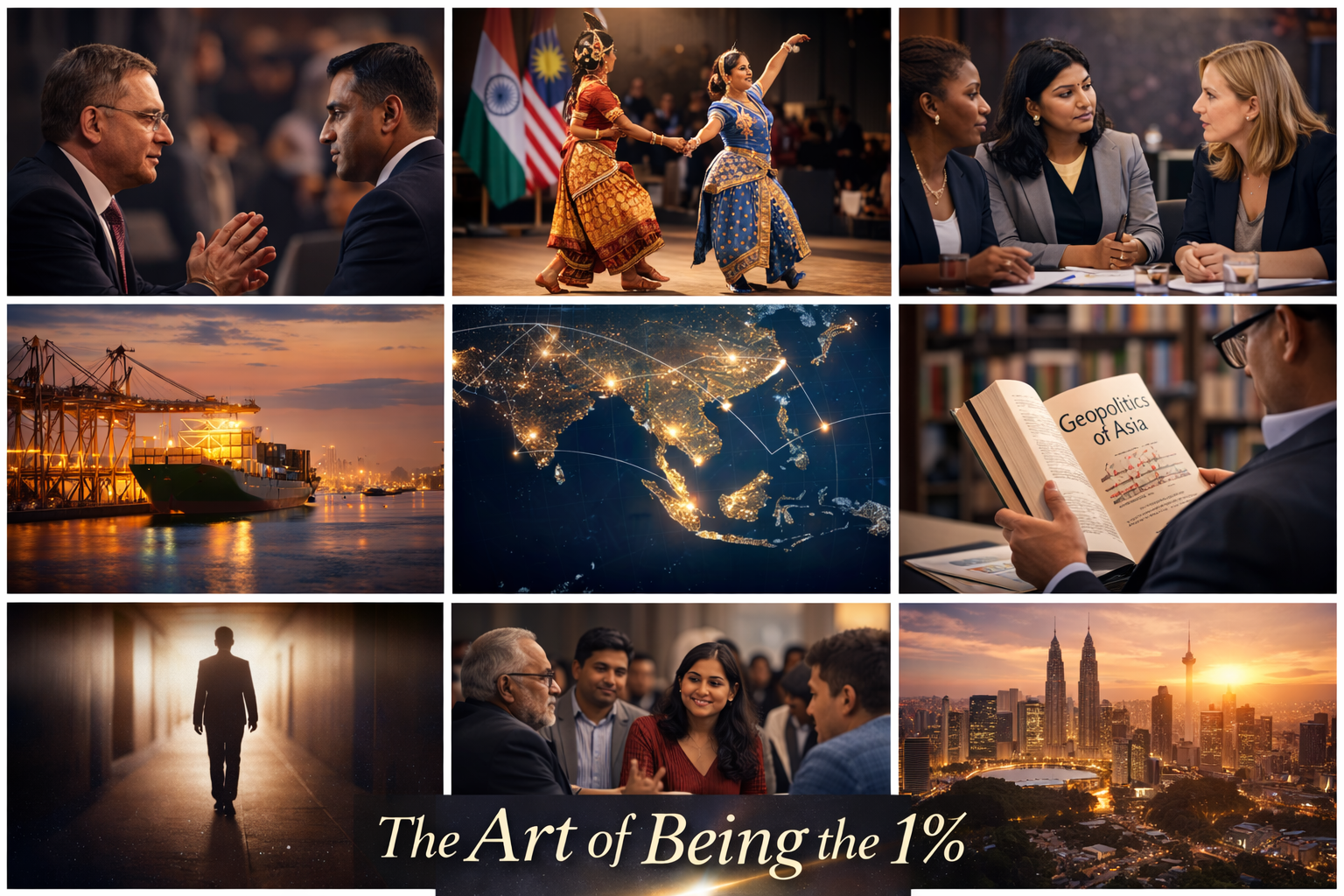
2. The Strategic 1%: States That Choose Growth and Peace
Small and middle powers — like Malaysia — also exemplify the art of the 1%. They cannot match superpowers militarily, but they strategically position themselves as hubs of diplomacy, economic connectivity, and regional leadership.
India and Malaysia show how focused efforts can yield outsized results. Malaysia is India’s third-largest trading partner within ASEAN, with bilateral trade reaching nearly US$20 billion in 2023-24 and growing across sectors like machinery, electrical equipment, and petrochemicals.
Beyond trade, both countries are aligning on peaceful cooperation and strategic dialogue. Their leaders have reaffirmed commitments to freedom of navigation, lawful commerce, and peaceful dispute resolution under international law, signalling a shared vision for stability, rules-based order, and development in the Indo-Pacific.
This partnership reflects a subtle but powerful truth: not all influence is about dominating others — some of the most meaningful influence comes from building bridges, deepening economic ties, and advancing shared interests. It is the quiet diplomacy of growth that advances peace.
LEAD THROUGH SELF-LEADERSHIP AT EMPOWER. CLICK TO KNOW MORE AND JOIN US
3. Geopolitics Today: Between Competition and Collaboration
We live in a world where geopolitical tension and cooperation coexist.
• ASEAN nations are navigating pressures from larger powers while striving for unity and collaborative solutions in the region.
• India balances relations with multiple partners, engages with ASEAN countries, and contributes to frameworks like the Act East and Indo-Pacific Oceans’ Initiative that emphasize inclusive security and development rather than confrontation.
Even global trade — once a purely economic activity — is now shaped by geopolitical alignments, with bilateral cooperation often translating into shared prosperity. Research shows that improved geopolitical alignment can increase bilateral trade by up to 20% over a decade, reinforcing the link between cooperation and economic growth.
4. Peace Through Growth — Not Just Peace for Its Own Sake
The real art of being the 1% lies in seeing growth and peace as complements, not competitors. When individuals and nations invest in education, innovation, resilient institutions, and inclusive policies, they contribute to stable societies less inclined toward conflict and more open to collaboration.
In India’s case, a projected 7–8% annual growth rate coupled with strategic multilateral partnerships is seen as essential for socioeconomic transformation by 2047 — a goal rooted in both prosperity and global engagement.
Similarly, Malaysia’s role within ASEAN and its economic relations with India reflect a shared ambition: to build connectivity, enhance prosperity, and uphold stability in a region that matters deeply to the world’s future. 
5. Conclusion: The 1% That Matters
The art of the 1% is not about exclusion — it’s about strategic inclusion. It’s about the individuals who raise their voices for justice, the partnerships that deepen cooperation between nations, and the policies that connect communities across borders.
In today’s geopolitical climate — one defined by complexity as much as opportunity — the ability to think like the 1% becomes essential. Not to dominate the narrative, but to shape it toward peace, equitable growth, and shared prosperity. Because when the few lead with vision, the many follow with hope.
I love a great conversation, reach out to create collaborations at etheldacosta@gmail.com